Self-Hosted Services Platform
Deployed a small self-hosted platform with reverse proxying, monitoring, DNS control, and controlled remote exposure.
Core stack
Case Snapshot
Role
Infrastructure ownership: architecture, hardening, access model, monitoring, recovery path, and operating notes.
Scope
I deployed a Docker-based services stack with reverse proxying, uptime monitoring, and controlled remote access. The platform complements the security lab by turning baseline infrastructure into an operational services...
Constraints
TLS-secured entry points and tunnel-based remote exposure avoid unnecessary public port openings and reduce attack surface. Monitoring and service separation make it easier to detect failures and operate personal infrastructure...
Result
Improved visibility into service health and uptime
Architecture
Node
Client devices consume internal services through stable named entry points instead of service-specific direct exposure.
Edge
A Linux host runs Dockerized services including reverse proxying, DNS control, and uptime monitoring.
Cloud
External reachability is brokered through tunnel-based access patterns rather than a broad set of public inbound ports.
Node
Client devices consume internal services through stable named entry points instead of service-specific direct exposure.
Edge
A Linux host runs Dockerized services including reverse proxying, DNS control, and uptime monitoring.
Cloud
External reachability is brokered through tunnel-based access patterns rather than a broad set of public inbound ports.
Technical Diagrams
Architecture diagrams show the system boundary, runtime flow, and operational decisions in a compact review format.
Self-Hosted Services Platform
The service-platform diagram presents the project as a small self-hosted operating environment: client devices enter through controlled access, a Linux host runs Docker services behind Nginx Proxy Manager, and reliability is handled through monitoring, DNS control, backups, and service separation.
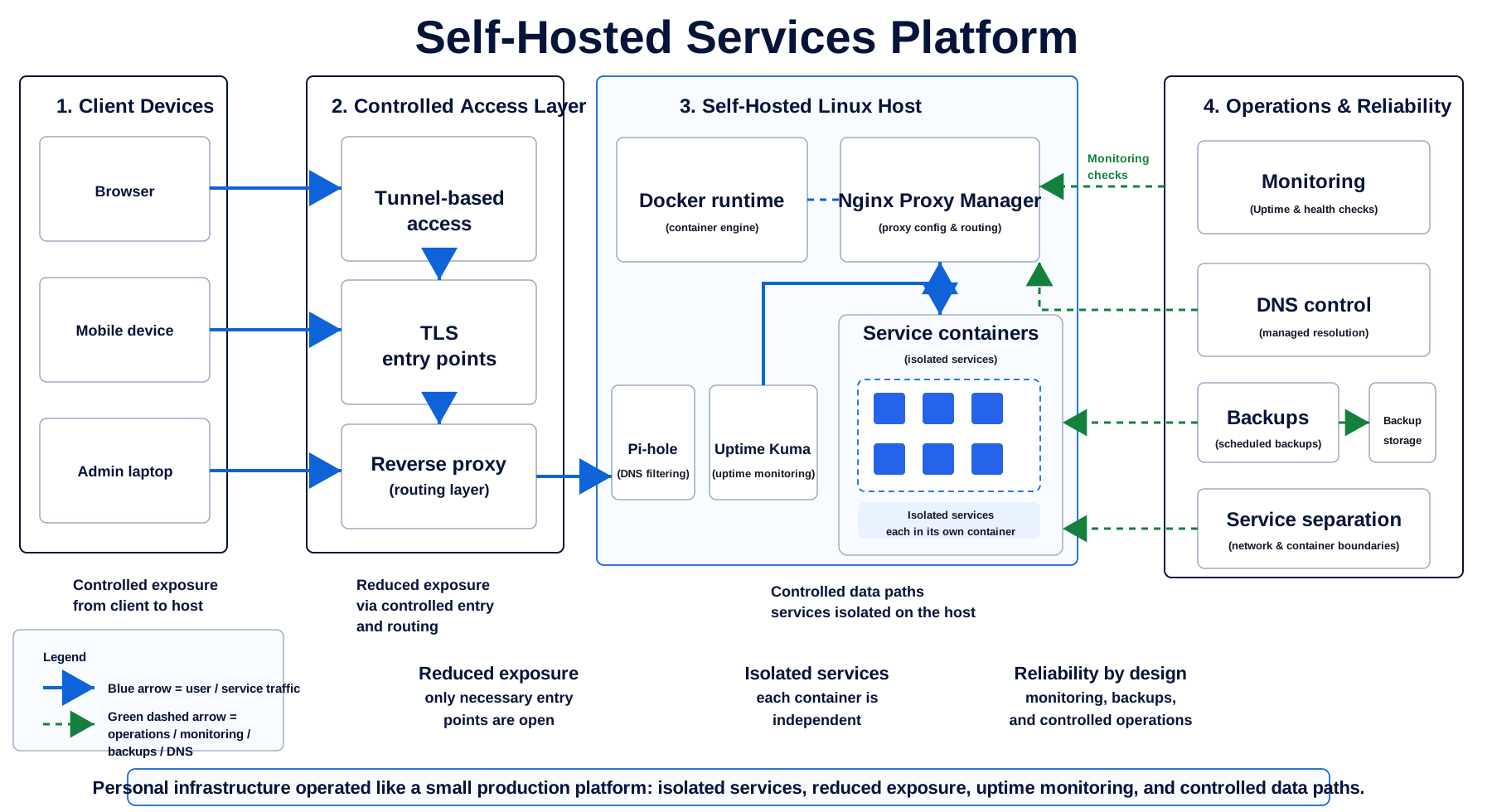
What the diagram shows
- Only necessary entry points are represented as public-facing
- Application services are isolated into containers instead of unmanaged host processes
- Monitoring, backups, DNS control, and service separation are part of the operating model
Technical Decisions
- Reverse proxying for clean service exposure
- Uptime monitoring for internal services
- DNS control and privacy-oriented service ownership
- Tunnel-based remote access instead of broad port forwarding
Challenges
- Public SaaS tools simplify operations but reduce control over data location, exposure, and operational behavior.
- TLS-secured entry points and tunnel-based remote exposure avoid unnecessary public port openings and reduce attack surface.
- Monitoring and service separation make it easier to detect failures and operate personal infrastructure like a small production platform.
Lessons Learned
- Improved visibility into service health and uptime
- Reduced public exposure of internal services
- Built an operations-ready environment that supports later AIoT workloads
Future Improvements
- Update diagrams when the architecture changes materially.
- Keep documentation concise: align README, architecture decisions, and screenshots.
Tech Stack
Related Project
Follow the adjacent case study to see how this project connects with the rest of the work.
The Vienna Fortress
Built a hardened Proxmox and Docker operations platform that combines layered security, real-time observability, reverse proxying, and automated container lifecycle management.