Engineering Portfolio Platform
Built a multilingual portfolio platform with structured content, CI-enabled deployment, and maintainable publishing workflows.
Case Snapshot
Role
Platform ownership: frontend implementation, deployment workflow, content structure, CI validation, and production release path.
Scope
I built the site on Next.js App Router with TypeScript, lightweight i18n, reusable content components, and GitHub-connected deployment. The result is a maintainable publishing platform that supports projects, CV, blog content,...
Constraints
A managed deployment model, minimal backend surface, and controlled content workflow keep the public platform simpler and safer to operate. Version-controlled content and preview deployments reduce publishing risk and make site...
Result
Built German and English SSR routes with static generation for portfolio pages and project details
Architecture
Node
The browser receives statically generated German and English pages with project, CV, blog, and case-study routes.
Edge
Vercel handles hosting, previews, and runtime operation for the public site experience.
Cloud
GitHub acts as the source-of-truth platform for version control and deployment-triggered updates.
Node
The browser receives statically generated German and English pages with project, CV, blog, and case-study routes.
Edge
Vercel handles hosting, previews, and runtime operation for the public site experience.
Cloud
GitHub acts as the source-of-truth platform for version control and deployment-triggered updates.
Technical Diagrams
Architecture diagrams show the system boundary, runtime flow, and operational decisions in a compact review format.
System / Deployment / Content Flow
End-to-end architecture view for the portfolio platform: local content work, GitHub source control, CI validation, Vercel deployment, public routes, and optional privacy-first analytics.
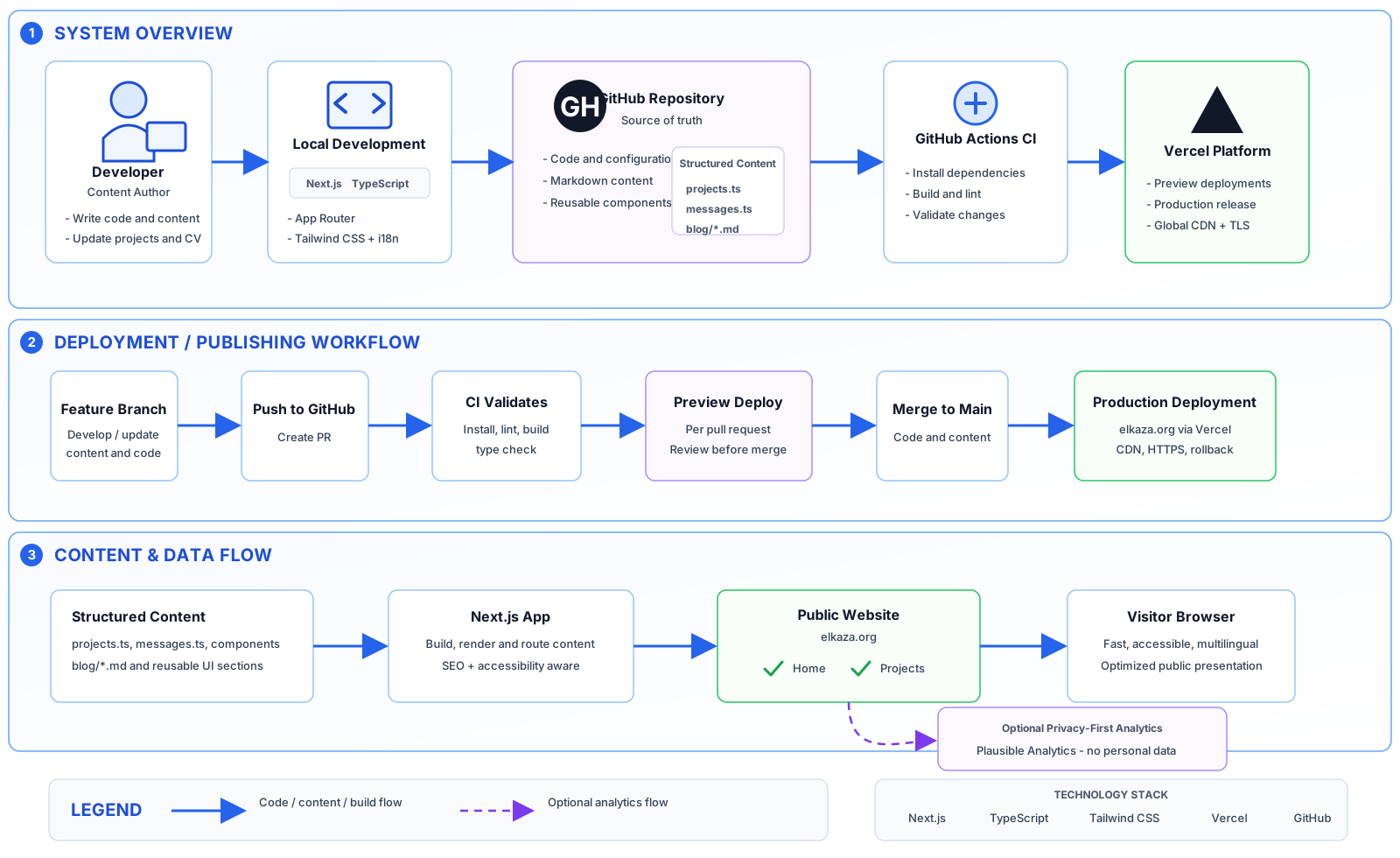
What the diagram shows
- Shows source control, structured content, CI validation, preview deployment, production release, and visitor access in one inspection view
- Matches the actual platform technologies: Next.js, TypeScript, Tailwind CSS, GitHub Actions, Vercel, and Plausible Analytics
- Shows the reusable project and case-study components that feed the generated routes
Technical Decisions
- Multilingual content model for projects, CV, and writing
- Reusable component structure for maintainable site evolution
- GitHub-connected deployment workflow
- Localized metadata, canonical URLs, reciprocal hreflang, and sitemap generation
Challenges
- A personal website needs to be fast, maintainable, and easy to update across multiple content areas without turning every change into manual rework.
- A managed deployment model, minimal backend surface, and controlled content workflow keep the public platform simpler and safer to operate.
- Version-controlled content and preview deployments reduce publishing risk and make site changes easier to review before release.
Lessons Learned
- Built German and English SSR routes with static generation for portfolio pages and project details
- Added localized metadata, canonical URLs, reciprocal hreflang, sitemap output, and production SHA verification
- Connected GitHub-based validation and Vercel deployment to the portfolio release flow
Future Improvements
- Update diagrams when the architecture changes materially.
- Keep documentation concise: align README, architecture decisions, and screenshots.
Tech Stack
Artifacts
Related Project
Follow the adjacent case study to see how this project connects with the rest of the work.
Unreleased Hybrid Deployment Prototype
Implemented an unreleased static-site deployment prototype across a Public Edge VPS and an On-site Server, with private Tailscale transport, containerized services and a repeatable delivery workflow.